
 05-Nov-2025
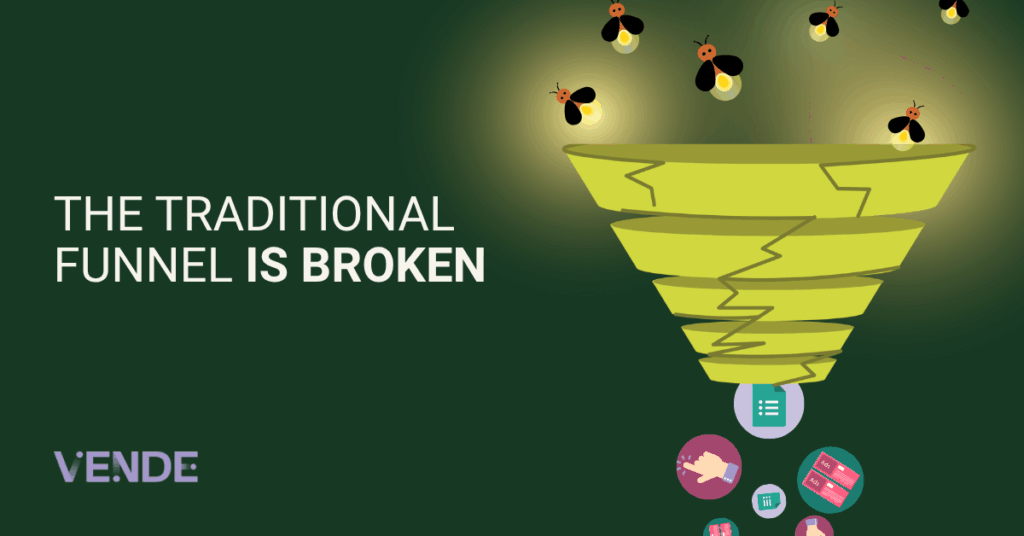
Let’s get one thing straight: your buyers are still buying. They’re just not following the neat, linear path you laid out for them. That old, reliable map of Awareness, Interest, Consideration, and Decision? It's time to file that under "historical documents."
B2B marketers used to live by a trail of digital breadcrumbs—clicks, form fills, and downloads. These were our signals, our proof that the funnel was working. But today, the most critical parts of the buyer journey are happening in the shadows, far from the reach of our analytics dashboards. Your ideal customers are learning about you in Slack communities, hearing your name on a podcast during their commute, and getting screenshots of your content from a colleague. They’re lighting up new paths of discovery—small sparks of attention that flash briefly and then disappear from view, like fireflies in the dark.
They are building trust and making decisions without ever clicking a single link on your website. This is the clickless future. It’s not a hypothetical trend; it’s the reality for modern B2B pipeline growth. If your go-to-market strategy still revolves around chasing clicks, you're not just behind. You're becoming invisible. This guide breaks down exactly how the B2B buyer journey is changing in a clickless future, why it demands your immediate attention, and how you can adapt to win.
The funnel may be fading, but new signals are lighting the dark. They’re small, fleeting sparks of unseen buyer intent.
What Is the Clickless Future in B2B Marketing?
The clickless future describes a reality where buyers engage with your content and form opinions about your brand without leaving a trackable, digital footprint. They consume, they learn, and they validate. All before you even know they exist.
Consider these common, untraceable scenarios:
- A decision-maker sees your CEO’s insightful post on LinkedIn but scrolls on without liking or clicking.
- A champion for your product forwards your latest case study to their team via email.
- Your brand gets mentioned as a top solution during a conversation in a private community.
- A prospect listens to a podcast where a guest praises your technology.
These moments are incredibly influential. In many ways, they are more powerful than an ad click because they are rooted in social proof and authentic discovery. Just because you can’t measure this activity with traditional attribution models doesn’t mean it isn’t driving revenue. It absolutely is.
Why This Change Matters Right Now
Ignoring this shift is no longer an option. The gap between how we think buyers are behaving and what they’re actually doing is widening, creating significant risks for marketing teams under pressure to deliver.
The urgency comes down to a few key factors:
- Research shows that more than 80% of the buyer journey happens before a prospect ever speaks to a sales representative. Buyers are self-educating and completing most of their research independently.
- Trust has shifted. Dark social channels—Slack, private communities, and peer-to-peer messages—have surpassed brand-controlled channels as the primary source of influence.
- Many marketing teams are still handcuffed to outdated metrics. Reporting on MQLs and form-fills as primary indicators of success provides a dangerously incomplete picture of your pipeline’s health.
The cost of inaction is steep. You risk wasting your budget on channels that buyers ignore, missing crucial opportunities to build trust, and running a go-to-market strategy that is fundamentally misaligned with modern purchasing behavior.
Question: How is the B2B buyer journey changing in a clickless future?
Answer: The B2B buyer journey is changing in a clickless future in four critical ways. First, more research is happening off-site in social feeds, communities, and on podcasts. Second, buyer activity is becoming less trackable as they engage without clicking or filling out forms. Third, decision-making is now peer-driven, with trust earned through referrals, not ads. Finally, this leads to delayed vendor contact, as buyers only reach out after completing most of their journey alone. This new path demands a strategy focused on brand presence, message memorability, and authentic engagement.
What the Buyer Journey Used to Look Like
Remember the good old days? Marketing ran an ad, a prospect clicked, and they downloaded a gated white paper. This triggered an email nurture sequence designed to guide them gracefully toward a sales conversation. It was simple, linear, and, best of all, trackable. We could draw a straight line from a click to a closed deal.
Except that was never the whole story. Even then, buyers were influenced by conversations and offline experiences. Today, that tidy model is completely broken. Buyers are actively avoiding friction. They have little patience for forms and are masters at sourcing information from trusted, third-party sources, like people and platforms, without direct connection to your payroll.
4 Ways the B2B Buyer Journey is Changing in a Clickless Future
1. The Journey Has Become Nonlinear and Unpredictable
There is no longer a universal starting point. A buyer might first hear your name in a Slack group, see your ad six times without clicking, and finally visit your website after a colleague mentions you. They zigzag across channels, moving backward and sideways through what we once considered a funnel. You are no longer in control of the path. Your opportunity is to be consistently present and valuable wherever your buyers spend their time.
2. Buyer Activity Is Mostly Invisible to Analytics
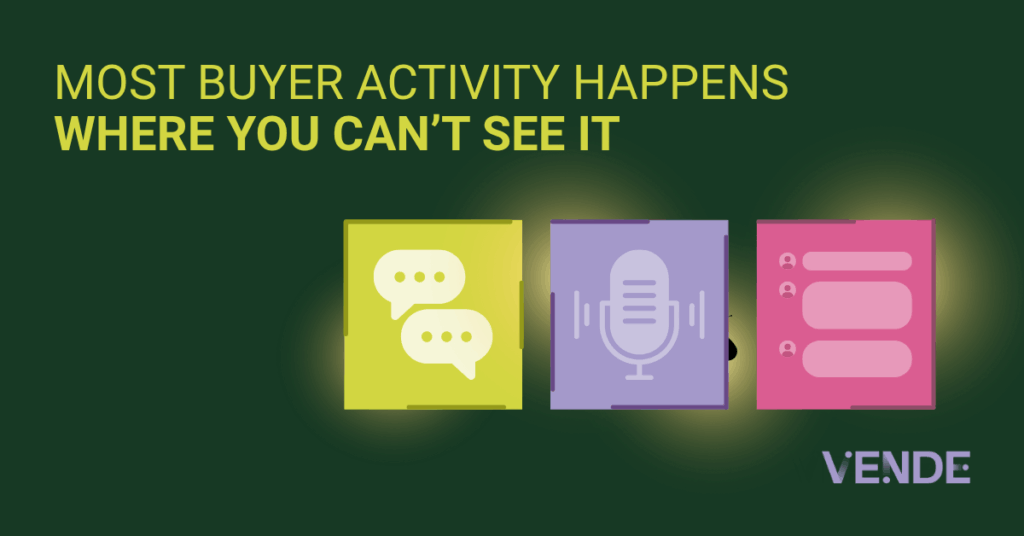
The most impactful touchpoints now occur in "dark social"—private channels your analytics can't see. Mentions in Slack, screenshots shared via text, and discussions in community forums are shaping your brand's perception. If your measurement strategy relies solely on what Google Analytics or your CRM can see, you are missing the most important part of the story. These moments are fleeting. Small sparks of attention that flash and fade like fireflies in the dark. Your strategy must account for creating influence in these unmeasurable spaces.
3. Content Must Be Designed to Be Remembered, Not Just Downloaded
In a world of infinite content, the most valuable currency is memorability. Buyers are unlikely to commit to a 20-page gated PDF. However, they will remember a sharp, insightful LinkedIn post that offered a new perspective or a simple framework that instantly solved a small problem for them. Your content must deliver value inside the feed, not behind a form. Focus on creating thumb-stopping informative moments that resonate immediately.
4. Buyers Trust Peers More Than Vendors
Peer influence is the new engine of B2B decision-making. According to Gartner, buyers spend only 17% of their journey speaking with potential vendors. The rest is spent consolidating independent research and speaking with peers. Before they ever read your website copy, they are checking Reddit threads and asking for opinions on LinkedIn. Your best marketing strategy is to equip your internal champions, happy customers, and subject matter experts with content that is worth sharing.
The Modern Buyer Journey Map
To adapt, we need a new mental model. Forget the funnel. Instead, visualize the journey in three phases:
- Phase 1: Discovery. This phase is entirely off-site and untracked. Buyers are exposed to your brand through social media, dark social channels, search results, and peer mentions. They are building passive awareness and forming initial impressions.
- Phase 2: Validation. Here, buyers begin to cross-check claims. They’ll look up your company on LinkedIn, read reviews, and ask their network for input. They are actively evaluating your brand's credibility and perception in the market.
- Phase 3: Action. Once a buyer is confident and has completed their independent research, they take direct action. This could be booking a demo, requesting a quote, or reaching out to a sales rep. They arrive already educated and with high intent.
Your job is to build trust and credibility across the invisible moments of the Discovery and Validation phases so that you are their first choice when a buyer is ready for Action.
How to Adapt Your Strategy for the New Buyer Journey
Transitioning to a clickless-first mindset requires a strategic shift, not just a tactical adjustment.
- Create for the journey, not for the click. Design content that provides value where your buyers already are—in their social feeds, communities, and inboxes.
- Focus on visibility and memorability. Your goal is to be seen and remembered. Invest in a clear point of view and consistent messaging across all platforms.
- Elevate your internal experts. Empower your team members and satisfied customers to become your most powerful brand amplifiers. Their authentic voice carries more weight than any ad.
- Rethink your metrics. Shift your focus from lead capture metrics like form-fills to influence metrics like branded search volume, social media engagement, and direct traffic to high-intent pages.
When the journey is invisible, trust becomes your brightest signal—like a steady glow guiding buyers toward connection before they ever make a move.

Key Takeaways:
- The B2B buyer journey is changing in a clickless future—buyers are no longer following linear or trackable paths.
- Most research and influence happen in dark social, peer networks, and untrackable channels.
- Marketers must design content for off-site consumption and focus on establishing brand presence, rather than just capturing leads.
- Peer validation and memorable, authentic messaging are critical for gaining trust and driving future pipeline.
- Align your metrics and teams to track influence and demand, not just clicks and forms.
For help adapting your go-to-market strategy as the B2B buyer journey is changing in a clickless future, contact us at Vende Digital. Let’s make your brand impossible to ignore—click or no click.

-2.png)
%20VD-4-26-2-Why%20B2B%20Teams%20Need%20to%20Shift%20From%20Lead%20Generation%20to%20Buyer%20Enablement-1.png)