
 19-Dec-2025
If you’ve ever peeked behind the curtain of most partner programs, it’s like stepping into a chaotic wizard’s workshop—piles of unused assets everywhere, confusing vendor-focused portals, and partners left searching for the right “spell” amid all the clutter.
Sound familiar?
When enablement content gets buried, training gets ignored, and co-marketing fizzles, it’s not the partners who are failing—it’s the system. They are often vendor-centric, overloaded with many assets partners will never use, and hidden behind a dozen logins. Then, we act surprised when enablement content goes untouched, training goes unfinished, and co-marketing campaigns stall before they even start. If this sounds painfully familiar, you're not alone. The problem isn't your partners; it's the program.
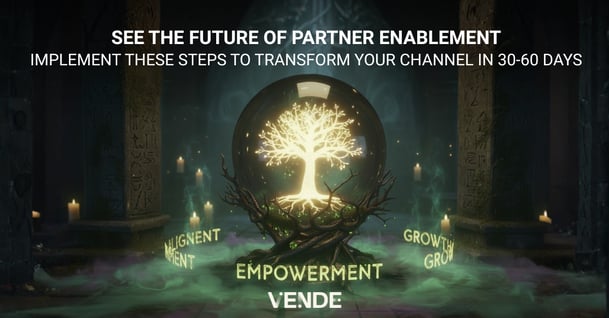
The mission, should you choose to accept it, is to reframe your entire approach. Stop thinking of partners as a distribution channel and start treating them like your most valuable customers. A partner-centric design means giving them exactly what they need, when they need it, in a format they will use. It’s not about being "nice"; it's about being effective. This guide provides practical steps you can implement in 30 to 60 days to transform your channel into a true extension of your brand.

What “Partner-Centric by Design” Really Means
Shifting to a partner-centric model is a change in mindset. Your partners aren't just a list in a CRM; they are the face of your brand in markets you can't reach alone. Just as aligning messaging and strategy is crucial in sales and marketing, illustrated by the power of buyer-first messaging, the same principle applies here: the business goal is to achieve a consistent story and flawless execution at scale, without needing to hand-hold every interaction.
For your partners, the experience should mean fewer choices, faster decisions, and clearer outcomes. The numbers don’t lie: revenue follows when partners get the support they need. Today, almost half of B2B sales come through partners.
Principles to Align On
Your team must align around a few core principles to reach that goal:
- Useful beats exhaustive: A curated set of high-impact tools is better than a library of a thousand forgotten assets.
- Productized kits over raw assets: Give partners a complete campaign-in-a-box, not just a logo file and a slide deck.
- Asynchronous, modular training over marathon webinars: Respect their time with bite-sized lessons they can complete between client calls.
- Measure what moves revenue, not vanity metrics: Focus on activities that lead to pipeline and closed deals, not just downloads and clicks.
Segment Partners and Personalize the Experience
There’s no single potion that guarantees every partner’s success. You create an effective enablement strategy like an alchemist crafts a formula—measuring carefully, blending deliberately, and producing real results. Start by grouping partners around what really drives their success, and shape each piece of your program to help them perform better.
Segment by What Actually Changes Execution
- Partner type: Are they a reseller, MSP, ISV, or system integrator? Their business models and needs are fundamentally different.
- Market focus: Do they serve a specific industry, region, or customer tier?
- Maturity: Segment them into new, active, and strategic partners to tailor the level of support.
Personalize the “Front Door”
Once you have your segments, personalize their journey from the moment they log in.
- Role-based views in your portal: A sales leader needs different information than a marketing coordinator. Show them only what's relevant.
- Curated kits: Offer content kits organized by segment, solution, and buyer stage.
- Localization plan: Go beyond language translation to include regional proof points and compliance requirements.
Governance Without Friction
Personalization requires guardrails. Provide pre-approved messaging and brand-safe templates to ensure consistency. Establish clear rules of engagement and SLAs for support so partners know what to expect.

What is a partner enablement strategy, and how do you design one that turns your channel into an extension of your brand?
A partner enablement strategy equips partners to sell and market your products with the same confidence and consistency as your in-house team. To design one, start by segmenting partners by their type and maturity. Then, deliver a curated library of content, modular training programs, and turnkey co-marketing kits with automatic co-branding and clear measurement. By adding through-channel automation, role-based portal views, and a shared scorecard, you create alignment. The result is consistent messaging, faster launches, and a real pipeline lift across your entire ecosystem.
Build a Library They’ll Use, Not Just Browse
Most partner portals are digital graveyards where good content goes to die. To build a library partner's love, you need to think like a product manager, not an archivist.
From Asset Dump to Content System
- Anchor on the buyer journey: Organize content around your top offers and the steps customers take to purchase them.
- Create opinionated sets: For each offer, provide a battlecard, a pitch deck, a demo flow, and an FAQ.
- Implement smart search: Use a search function that can read inside files and includes filters that partners actually use.
Plug-and-Play Campaign Kits
Imagine launching a partner campaign as easily as hitting “Play” on your favorite playlist. That’s the power of a well-built turnkey kit. Instead of sending a jumble of disconnected files, you’re giving partners a complete, plug-and-play package.
- Emails: Include 3–5 pre-written messages, each with a strong subject line and a clear call to action. Personalization drives engagement—especially as B2B email marketing continues to evolve.
- Social Posts: Platform-tailored content and visuals, so partners can go live across their channels in minutes.
- Landing Page: A fully built conversion page, complete with form fields and performance tracking baked in.
- SDR Talk Track: Ready-made scripts and follow-up sequences to turn interest into booked meetings.
The magic happens with auto-co-branding. Allow partners to upload their logo once and have the entire kit automatically rendered with both brands.
Keep It Fresh
Content gets stale. Implement an update cadence with clear version tags. Use features like "Editor’s Picks" or "What Similar Partners Ran" to highlight fresh, high-performing campaigns.
Train for Completion and Confidence
Lengthy training webinars are a huge source of friction. Enablement only works if it sticks, and it sticks when it's short, specific, and tied to action.
Modular, Self-Serve Learning
- Bite-sized lessons: Break training into 5–10 minute lessons with clear, achievable outcomes.
- Valuable certifications: Offer certifications that unlock MDF, provide early access to new kits, or provide other tangible benefits.
- Embedded learning: Use quizzes and tooltips directly within the partner portal to reinforce knowledge.
Live Where It Counts
Human connection is key for your most strategic partners. Host monthly office hours and short enablement sessions tied to new offers to keep them engaged and confident.
Automate the Boring, Accelerate the Launch
If a partner needs a marketing degree and three levels of approval to launch a campaign, you've already lost. Through-channel marketing automation (TCMA) is the solution.
Through-Channel Marketing Automation
- Click-to-launch campaigns: Partners can launch pre-approved campaigns with just a few clicks.
- Scheduled sends and tracking: Automation handles the cadence and tracks performance, giving you complete visibility.
Sales Hand-Offs That Don’t Leak
- Lead routing: Set up rules to ensure leads go to the right partner instantly.
- Automated alerts: Notify partners about new meetings and flag stalled opportunities.
Measure What Matters and Share the Score
You can't improve what you don't measure. Focus on metrics that show engagement, action, and outcomes.
The Partner Engagement Score
Create a simple score based on key signals: logins, training progress, kit launches, and social syndication. Weight each signal by its impact on the pipeline.
Business Outcomes
Track the metrics that leadership cares about: meetings set, pipeline by type, win rate, and sales velocity. Also, monitor brand quality through compliance pass rates and landing page conversions.
Review Rhythm
Review your operations monthly to fine-tune kits and training. Hold quarterly business reviews with partners to align on goals and celebrate wins.
A Practical 30–60–90 Day Plan
- Days 1–30: Design: Segment partners, pick two priority offers to productize, and draft the components for your first turnkey kit.
- Days 31–60: Build: Launch your refreshed portal with role-based views. Ship the first kit with auto co-branding and roll out the modular training.
- Days 61–90: Scale: Pilot TCMA with a small group of partners, publish your engagement score, and localize the first kit for a new region.
Pitfalls to Avoid
- Too many choices: If it's not relevant to a segment, hide it.
- Training that prizes seat time over application: Keep it short and actionable.
- MDF that rewards paperwork: Tie funds directly to outcomes.
- Dashboards that ignore assisted influence: Track every touchpoint.
- One-size-fits-all communications: Tailor your messages to your segments.
How Leadership Helps Without Micromanaging
Leadership’s role is to set the North Star, not steer the ship. They should establish partner-led pipeline targets, fund the creation of hero kits each quarter, and celebrate meaningful actions, not just asset downloads. Publicly backing the attribution model is critical to prevent internal teams from relitigating wins.
Your Channel, Your Brand
When you design your program for your partners first, everything changes. Your messaging stays consistent, your partners launch campaigns faster, and your brand appears unified everywhere it shows up. You're no longer just a vendor with a portal; you're a brand that's easy to sell.
Ready to reduce friction and build a partner enablement strategy that drives real revenue? Contact us today, and we can help you identify the fastest path to measurable lift.
Key Takeaways
-
A partner-centric strategy drives consistent execution and transforms your channel into a brand extension.
-
Segment partners by type and maturity, then personalize portal views, content kits, and training.
-
Use through-channel automation to remove clicks and accelerate campaign launches. Share a simple scorecard that blends engagement signals with revenue outcomes to create alignment.
-
Start with two hero offers to build momentum and prove the value of your new approach.

-2.png)
%20VD-4-26-2-Why%20B2B%20Teams%20Need%20to%20Shift%20From%20Lead%20Generation%20to%20Buyer%20Enablement-1.png)