
 07-Jul-2026
Summary
- B2B engagement is not the same thing as buying intent.
- Many buyers are consuming content because they are learning, not because they are evaluating vendors.
- The companies that generate pipeline are the ones that help buyers build confidence, not just awareness.
- Turning engagement into revenue requires buyer enablement, sales and marketing alignment, and a focus on progression rather than activity.
How can B2B companies turn engagement into pipeline growth?
The strongest pipeline often starts long before a buyer requests a demo. Companies that turn engagement into revenue focus on educating buyers, reducing uncertainty, and helping decision-makers build confidence internally. When curiosity develops into confidence, meaningful sales opportunities tend to follow.
Engagement Is Everywhere. Pipeline Is Not.
Most B2B marketing teams are not struggling to capture attention.
They're generating webinar registrations, content downloads, email engagement, social interactions, and website traffic. Dashboards are full of activity. Reports show prospects consuming content and spending time with the brand. On the surface, it looks like marketing is doing exactly what it should.
Yet many organizations still find themselves asking the same question: If engagement is healthy, why isn't pipeline growing at the same rate?
The answer is that engagement and pipeline are not measuring the same thing.
Engagement tells you someone is paying attention.
Pipeline tells you someone is preparing to make a decision.
Somewhere between those two points, buyers need to move from curiosity to confidence. And that's where many B2B organizations struggle.
Buyer activity doesn't always signal buyer intent. People are consuming content, attending webinars, and researching new ideas at a much higher rate than they're actually purchasing. In many cases, they're trying to stay ahead of industry changes or answer questions from leadership long before a budget, project, or buying committee ever enters the picture.
In those situations, engagement is real. The interest is genuine. But interest alone does not mean someone is ready to purchase.
Why Curiosity and Buying Intent Are Not the Same Thing
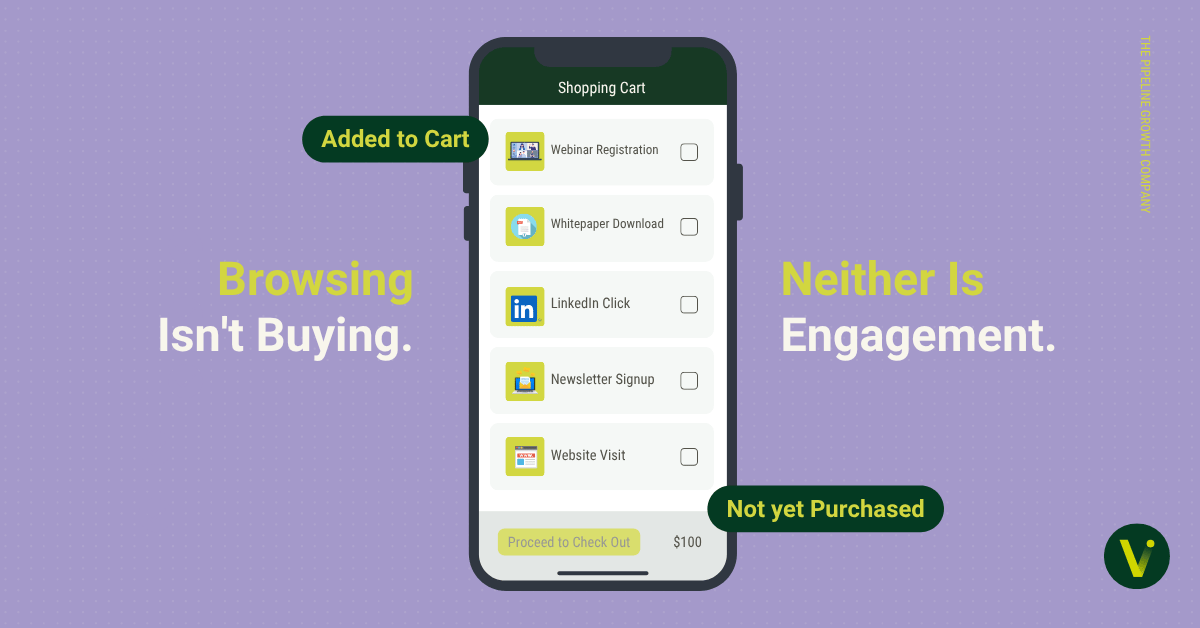
One of the most common mistakes B2B organizations make is treating engagement like a hand raise.
Someone attends a webinar and immediately gets routed to sales. A prospect downloads a report and receives a demo request. A website visitor spends a few minutes on a product page and suddenly appears on an SDR call list.
The assumption is understandable. If someone is engaging with your content, they must be moving closer to a buying decision.
But that assumption overlooks how modern B2B buyers actually behave.
Most buyers spend significant time researching long before they evaluate vendors. They're gathering information, exploring possibilities, and trying to understand whether a problem is important enough to solve. In many cases, they are not looking for a solution yet. They're looking for clarity.
This distinction matters because buying decisions rarely fail due to a lack of information. More often, they stall because buyers lack confidence.
Even when someone believes a solution could help, uncertainty creates friction. They may not know how to explain the recommendation internally. They may worry about budget approval. They may be concerned about implementation risk, stakeholder resistance, or competing priorities. A buyer can be genuinely interested in a solution and still feel completely unprepared to advocate for change.
That's why engagement alone is such a dangerous metric when viewed in isolation. It tells you what captured attention. It does not tell you whether confidence exists.

The Real Goal Is Helping Buyers Build Confidence
If curiosity is the starting point, confidence is the destination.
The companies that consistently generate pipeline understand that their job is not simply to create awareness. Their job is to help buyers become comfortable enough to take action.
That requires a different approach to nurturing.
Instead of immediately pushing engaged contacts toward a sales conversation, effective teams create space for learning. They recognize that many buyers are still in what could be considered a learner stage. These are people who have identified a challenge worth exploring but are not yet ready to evaluate vendors or solutions.
Rather than asking, "How do we get this person into a demo?" the better question becomes, "What does this person need to learn next?"
That shift changes the entire customer experience.
A buyer researching AI adoption may not need a product walkthrough. They may need examples of how similar companies are approaching implementation. A marketing leader exploring pipeline growth may not be looking for a platform demonstration. They may need a framework for diagnosing where opportunities are getting stuck. A revenue leader evaluating buyer enablement may first need to understand how buying committees make decisions.
When organizations focus on helping buyers make sense of their situation, they create trust. And trust is often the foundation on which confidence is built.
Ironically, the fastest path to pipeline is often resisting the urge to force a sales conversation before a buyer is ready.
Give Sales Context, Not Just Leads
Another reason engagement often fails to become pipeline is the way marketing and sales interact.
In many organizations, marketing hands sales a contact record and considers the job complete. Sales receives a name, an email address, and perhaps a lead score. The context behind the engagement is often missing.
That creates a problem.
Without understanding what a buyer has been learning about, sales is forced to guess. Outreach becomes generic. Conversations start with product pitches rather than relevant insights. Buyers feel like they're beginning the journey all over again.
The most effective organizations approach handoffs differently. They equip sales with the story behind the engagement. They help sellers understand what content a buyer consumed, what challenge appears to be driving interest, whether engagement has been consistent over time, and whether other account stakeholders are also participating.
This creates continuity between marketing and sales. Instead of interrupting the buyer's learning journey, sales can continue it.
That distinction may seem small, but it fundamentally changes how buyers experience your brand.
Measure Progression, Not Just Activity
The final shift involves how success is measured.
Many marketing teams focus heavily on engagement metrics because they are easy to track. Registrations, downloads, clicks, and website visits all provide useful information. The problem is that activity alone does not necessarily indicate progress.
What matters more is whether engagement is deepening.
Are buyers returning repeatedly? Are they moving from broad educational content to more specific problem-focused content? Are multiple stakeholders from the same account engaging with similar topics? Are sales conversations emerging naturally from nurture programs?
These signals reveal something far more valuable than engagement alone. They reveal movement.
Pipeline growth does not happen because someone downloaded a report. It happens because buyers gradually become more informed, more confident, and more aligned internally.
The organizations that recognize this difference can build marketing systems that support the entire buying journey rather than simply generating activity at the top of the funnel.
Pipeline Growth Starts Long Before the Demo Request
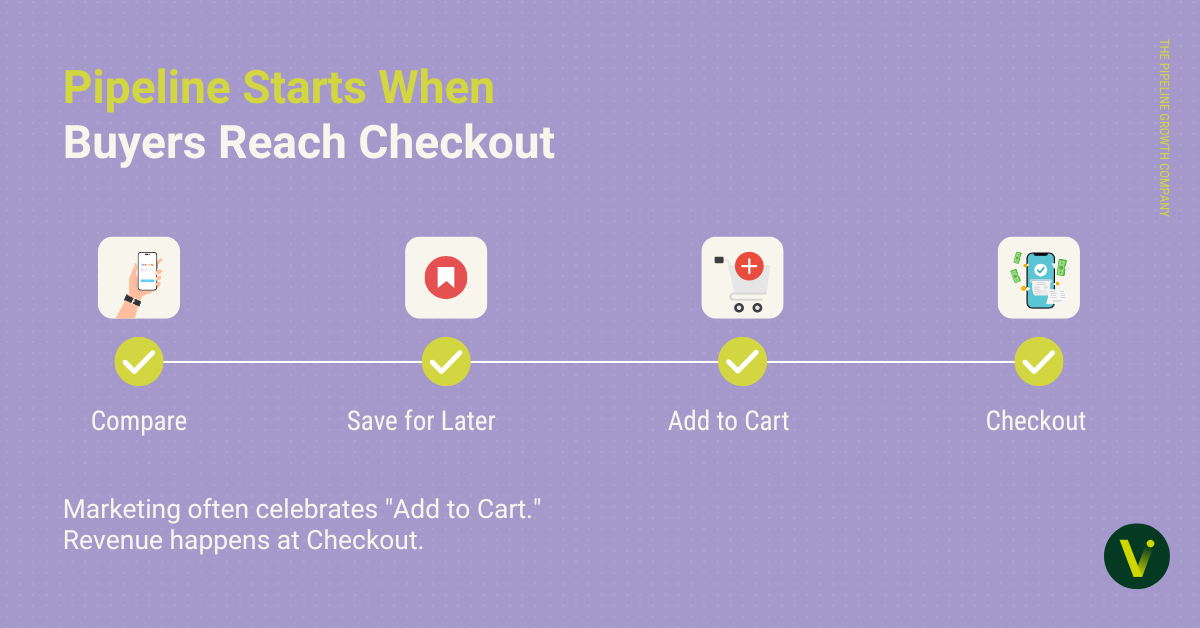
In modern B2B environments, pipeline does not begin when someone fills out a form.
It begins much earlier, often at the moment a buyer starts exploring a problem they don't fully understand.
From there, the journey is rarely linear. Buyers gather information, test assumptions, seek input from colleagues, evaluate risks, and slowly build confidence in a potential path forward. Throughout that process, engagement serves as a signal of learning, not necessarily buying.
That's why curiosity should not be dismissed simply because it doesn't immediately produce pipeline. Curiosity is the raw material pipeline is built from.
The challenge for marketing and sales teams is helping buyers move from curiosity to confidence. When that happens, confidence turns into internal consensus, consensus turns into action, and action turns into revenue.
If your organization is generating engagement but struggling to convert that attention into meaningful opportunities, it may be time to rethink how buyers move through your funnel. At Vende, we help B2B organizations build buyer-centric marketing systems that create trust, support buying committees, and generate measurable pipeline growth. Contact us to learn how we can help.
Key Takeaways
- Engagement signals attention, but it does not automatically signal buying intent.
- Many B2B buyers engage with content because they are learning, not shopping.
- Confidence is often the missing link between curiosity and pipeline creation.
- Sales and marketing alignment improves when teams share buyer context, not just lead information.
- The most valuable metric is progression toward confidence, consensus, and action—not engagement alone.

-2.png)
%20VD-4-26-2-Why%20B2B%20Teams%20Need%20to%20Shift%20From%20Lead%20Generation%20to%20Buyer%20Enablement-1.png)