 25-Mar-2026
According to the latest research by Dreamdata and LinkedIn, roughly 80 percent of the B2B buying journey happens before a buyer ever enters the sales pipeline.
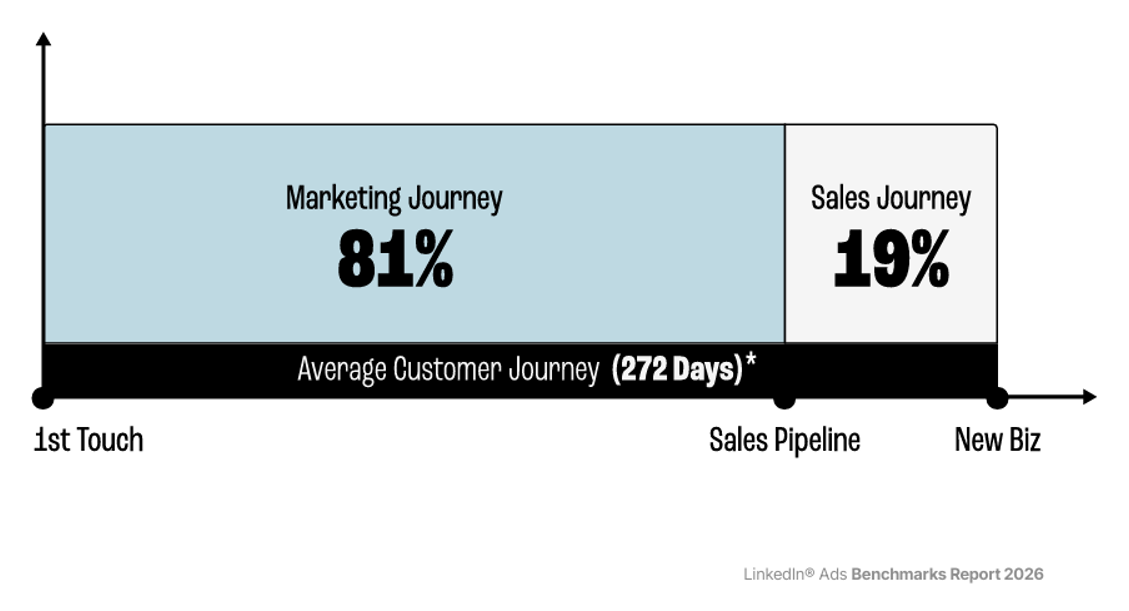
Meaning, most of the real decision making happens in the marketing department before Sales ever gets involved.
Buyers research independently.
They compare vendors.
They read reviews, listen to podcasts, attend webinars, and ask peers for recommendations.
By the time someone finally books a meeting or submits a demo request, much of the thinking is already done. For revenue leaders, this raises an important question.
If most of the journey happens before pipeline, how do we know whether marketing is actually working?
Waiting for leads or opportunities to appear is like judging a tree's health by looking only at its fruit. By that point, the conditions that created success or failure happened months earlier.
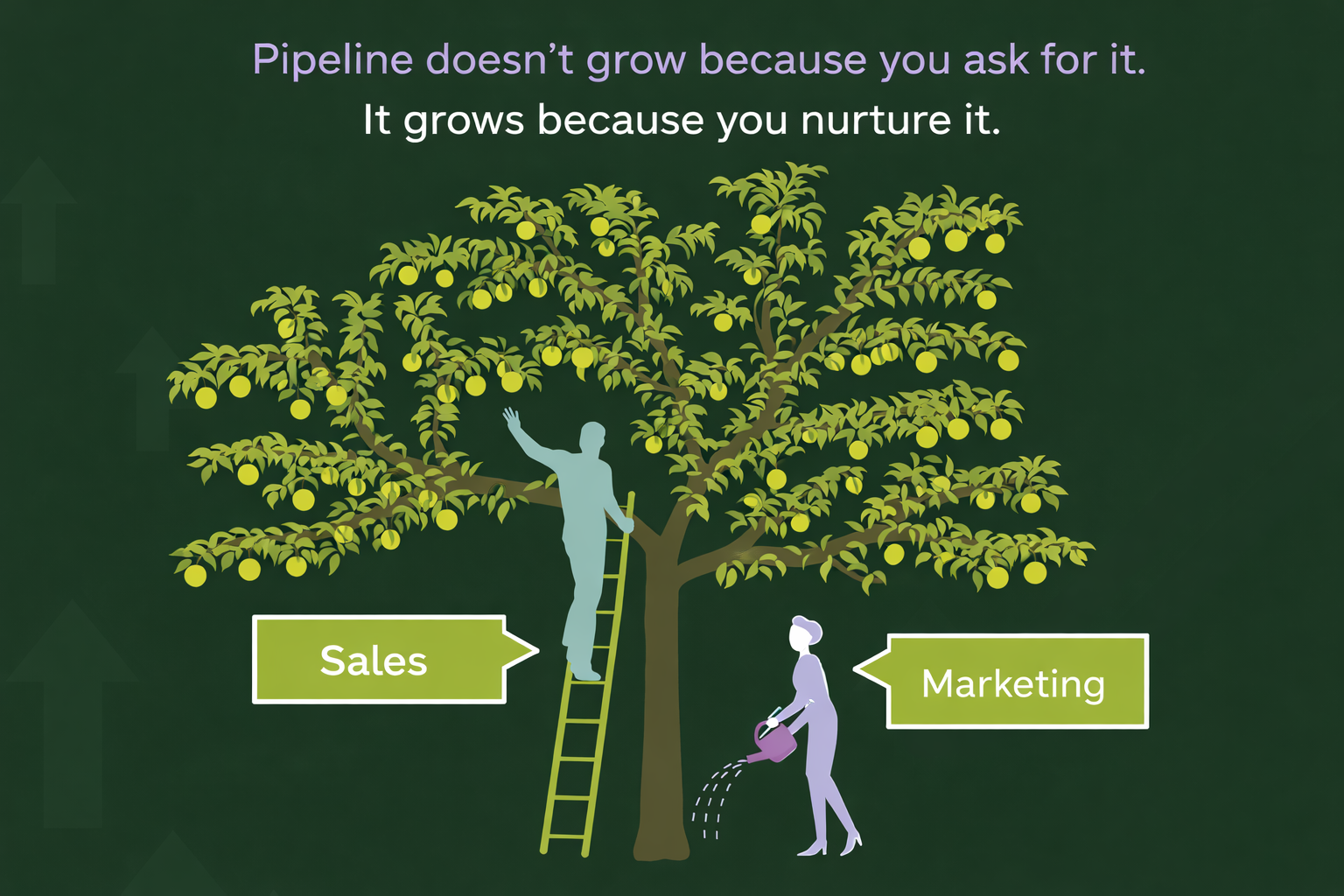
To build predictable pipeline, companies need to start measuring what happens during the 81% percent of the journey that occurs before the pipeline stage.
What Metrics Show Marketing Is Working Before Pipeline Appears?
This is the question many CEOs and CROs are quietly asking their marketing teams.
Traditional dashboards usually track two numbers:
- Leads generated
- Pipeline created
Those metrics matter. But they are lagging indicators.
By the time someone fills out a form, their journey may have started months earlier. To understand whether marketing is building future pipeline, revenue leaders must start tracking the signals that appear earlier in the buyer journey.
The Five Signals That Predict Future Pipeline
When buyers research independently before engaging sales, several signals appear long before an opportunity is created.
Revenue leaders should watch five categories of signals.
1. Market Awareness Signals
The first step in building pipeline is simply showing up where buyers are already learning.
Key indicators include:
-
Growth in branded search traffic
-
Share of search versus competitors
-
Direct website visits
-
Social reach among your target audience
-
Audience growth for webinars, podcasts, and newsletters
-
Visibility in AI search results
These signals tell you whether your company is becoming easier to discover and harder to ignore. If awareness stagnates, future pipeline will eventually stagnate too.
2. Authority Signals
Buyers must begin to see you as a credible source of expertise. Authority signals show whether your insights are resonating.
Examples include:
-
Time spent on educational content
-
Video completion rates
-
Repeat website visitors
-
Newsletter subscriptions
-
Engagement with thought leadership content
-
Mentions from analysts or industry publications
When these signals grow, it means buyers are learning from you and trusting your opinions. And that trust dramatically increases the likelihood that they will consider you later.
3. Engagement Signals
Next comes deeper interaction. This is where anonymous buyers begin to lean in.
Indicators include:
-
Multiple website visits from the same company
-
Consumption of multiple content assets in a single session
-
Webinar attendance and repeat attendance
-
Interactive tool usage
-
Community participation
-
Responses to SDR outreach following content engagement
These signals indicate buyers are moving from passive awareness into active exploration.
4. Account-Level Activity Signals
At this stage, the focus shifts from individual contacts to accounts and buying groups. Most B2B purchases involve multiple stakeholders. Deals often begin forming when several people inside the same company start researching simultaneously.
Important signals include:
-
Engagement from multiple contacts within an account
-
Target account engagement scores rising
-
Visits to product comparisons or pricing pages
-
Interaction with retargeting campaigns
-
Increased response rates to sales outreach
These signals suggest an account may be moving from learning into solution evaluation.
5. Buying Signals
Finally, the familiar signals appear.
-
Demo requests
-
Contact sales forms
-
RFP submissions
-
Direct outreach to sales
At this stage, the buyer officially enters the pipeline. But by then, the real decision process is already well underway.
Why These Signals Matter Even More in the Clickless Future
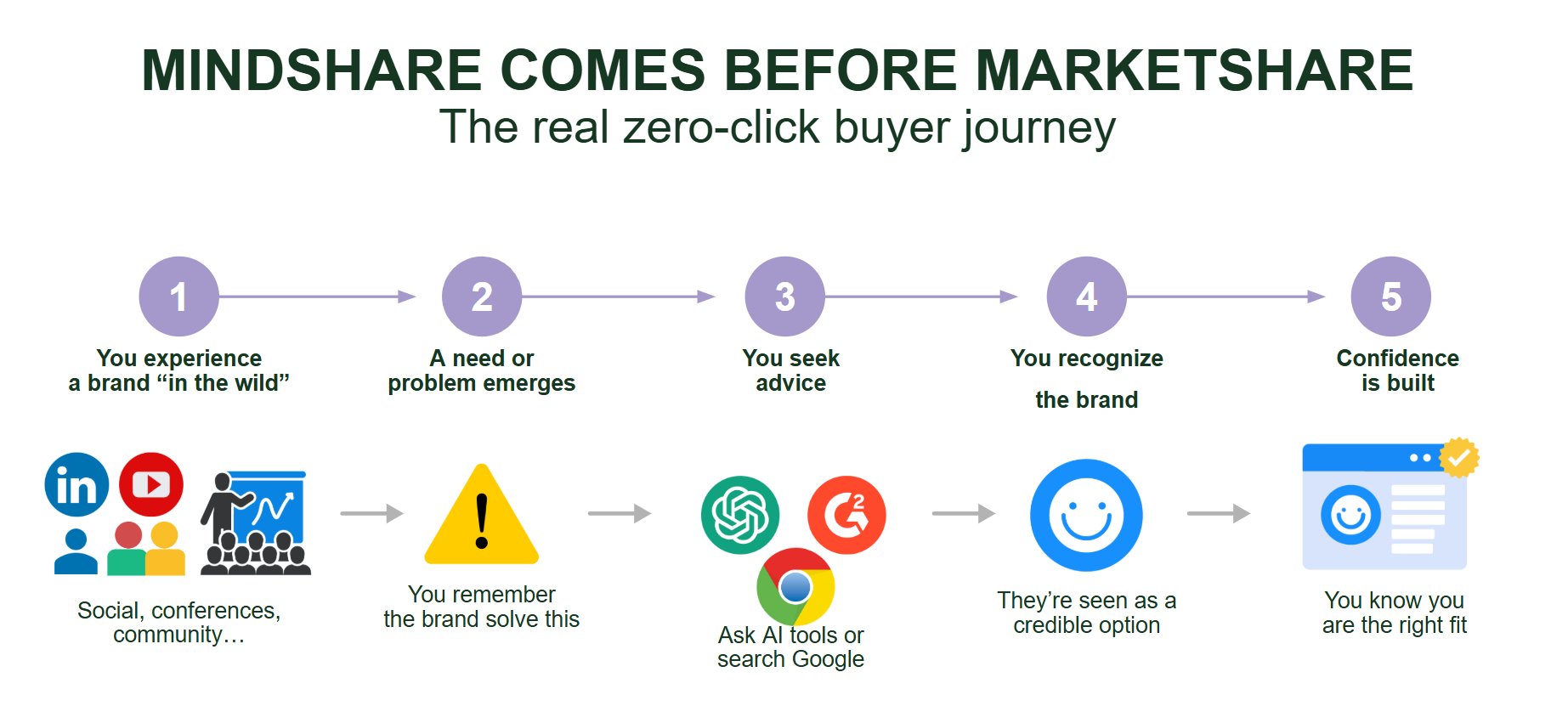
Another shift is accelerating this trend. More buyer education now happens without ever clicking through to a website.
Buyers increasingly learn directly in:
-
LinkedIn feeds
-
Industry communities
-
Podcasts
-
Video platforms
-
AI search engines
In what many marketers now call the clickless future, buyers consume insights without necessarily visiting a landing page or filling out a form.
That means traditional marketing metrics like page visits and form fills capture only a fraction of real buyer behavior. The companies that win in this environment focus on earning attention and trust wherever buyers are already learning.
Turning These Signals Into a System
Recognizing these signals is one thing. Acting on them consistently is another.
The most successful revenue teams build systems designed to capture and respond to buyer signals across the entire journey. At Vende, we think about this through a Pipeline Growth System built around three interconnected levers.
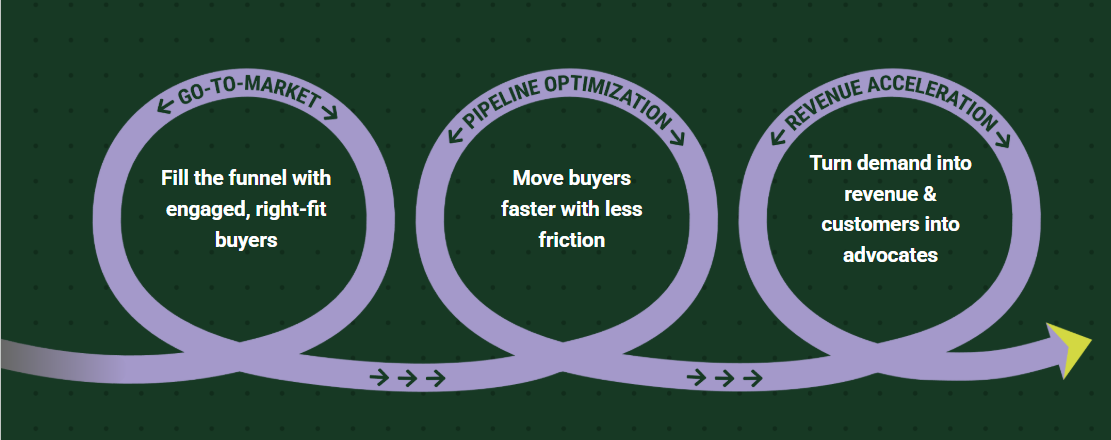
The Three Levers of Pipeline Growth
-
Go-To-Market: Defines the audience, messaging, and campaigns that reach buyers where they already learn.
-
Pipeline Optimization: Captures buyer signals, aligns marketing and sales around shared data, and ensures engaged accounts receive the right follow-up.
-
Revenue Acceleration: Helps sales convert pipeline into closed revenue through better enablement, proof content, and deal support.
When these levers operate together, marketing and sales function as one coordinated revenue engine.
The Buyer Journey Is a Wheel, Not a Funnel
Internally, companies often think in terms of funnels.
But from the buyer’s perspective, the journey behaves more like a continuous wheel.
Future buyers move through several stages over time.
Activate Audience: Show up consistently in the places where future buyers learn.
Establish Authority: Provide content and insights that build credibility.
Nurture Relationships: Stay top of mind through education, events, and community.
Growth and Retention: Turn customers into long-term advocates.
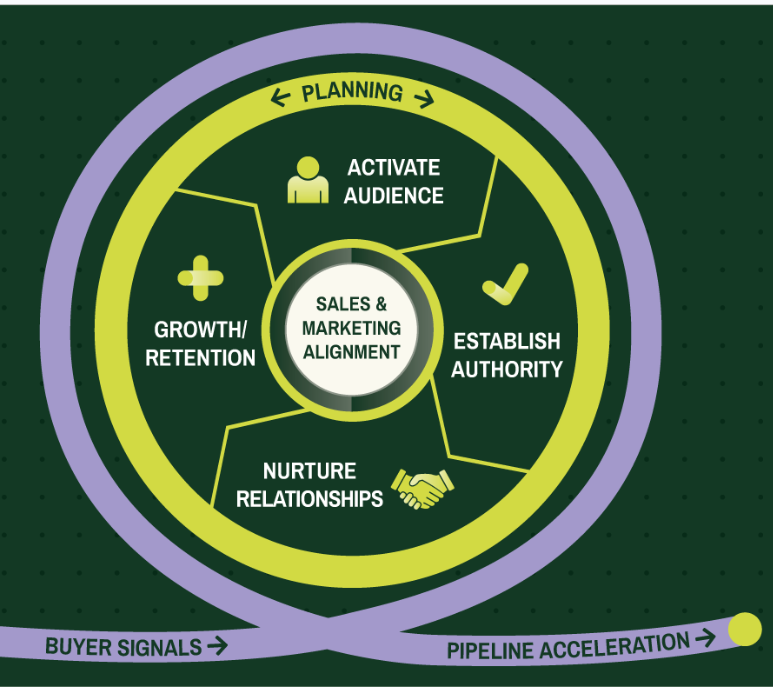
Rather than relying on one-off campaigns, successful companies build always-on systems that keep this wheel turning.
Turning Buyer Signals Into Action
Of course, none of this works without the ability to capture and interpret buyer signals. Platforms like HubSpot help unify engagement data across marketing, sales, and customer teams.
When implemented correctly, these systems allow organizations to:
-
Identify engaged accounts
-
Track buying group activity
-
Score buyer intent signals
-
Trigger outreach at the right moment
The technology itself is not the strategy. But it provides the hub that connects all the signals generated throughout the buyer journey.
The Real Job of Modern Marketing
The biggest takeaway from the Dreamda and LinkedIn Benchmark report is simple. Marketing’s job is to increase the number of buyers who already trust you before sales ever talks to them.
When that happens:
-
Sales conversations start earlier.
-
Win rates increase.
-
Sales cycles shorten.
-
Pipeline becomes more predictable.
Because by the time a buyer enters the pipeline, the real competition has often already been decided.
And the companies that invest in the first 81 percent of the journey are the ones most likely to win.
FAQ
What metrics predict pipeline growth in B2B marketing?
Leading indicators include brand search growth, share of search, repeat website visits, account-level engagement, multi-contact activity within target accounts, and event or content participation.
Why do most B2B buyers research before contacting sales?
Modern buyers prefer to self-educate through content, peer networks, communities, and digital channels before engaging vendors.
What does the clickless future mean for marketing?
Buyers increasingly consume information directly within platforms like LinkedIn, podcasts, and AI search engines without clicking through to websites, making attention and trust more important than form fills.


-2.png)
%20VD-4-26-2-Why%20B2B%20Teams%20Need%20to%20Shift%20From%20Lead%20Generation%20to%20Buyer%20Enablement-1.png)