 23-Oct-2026
Article Summary
- The future of B2B SEO is about visibility, not just traffic, because 68% of U.S. Google searches now end without a click.
- Buyers haven't stopped researching. They've stopped leaving the platforms where they research.
- Your website can't carry the whole buyer journey anymore, so your positioning needs to show up on LinkedIn, YouTube, Reddit, and in AI Overviews.
- Platform-native, zero-click content earns far more reach than posts built to chase a click.
- Smart teams are shifting from last-click attribution to lift-based measurement.
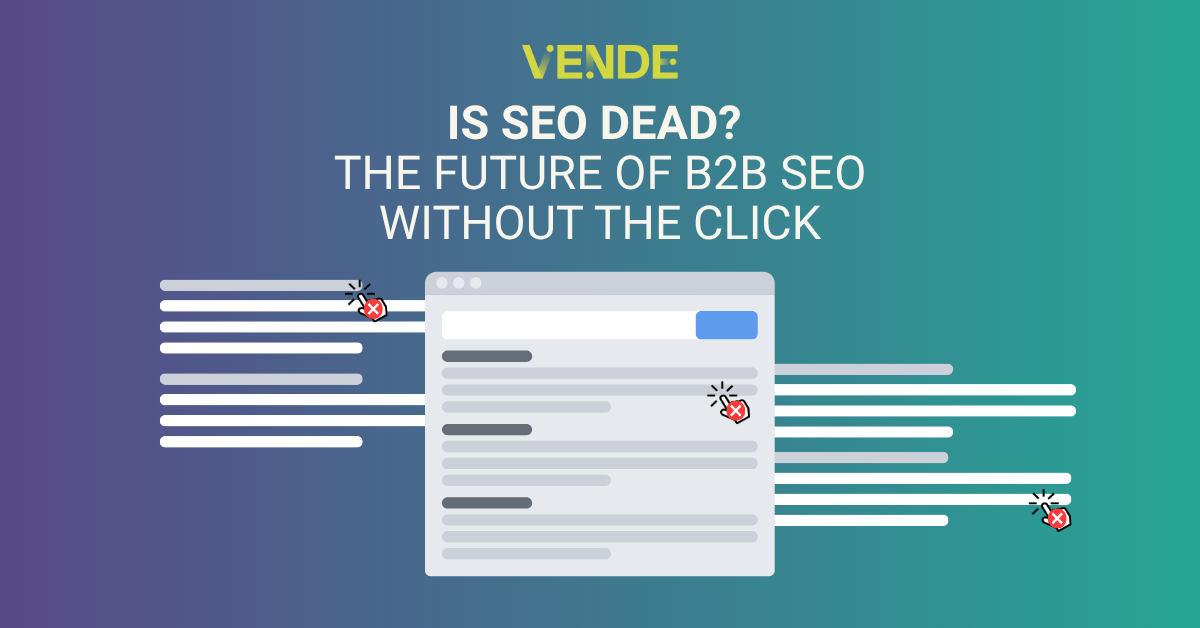
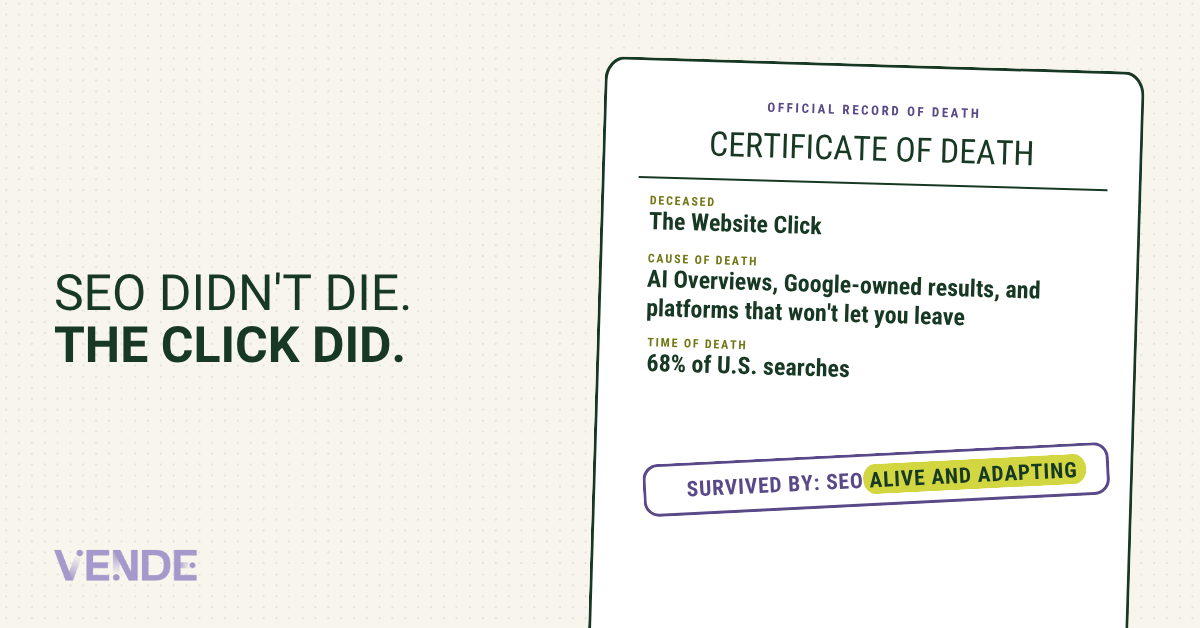
If your rankings look fine but your GA4 report looks like a ghost town, you're not imagining things. The future of B2B SEO is shifting fast, and new SimilarWeb research shared by SparkToro founder Rand Fishkin shows that 68% of U.S. Google searches now end without a click. Out of every 1,000 searches, only 232 send anyone to the open web. Two years ago, that number was 316.
So, is SEO dead? Nope. The click is the one flatlining. And judging SEO by how much traffic it shovels onto your website? That's on life support. Google is answering more questions itself, buyers are researching in more places, and brands now have to earn visibility long before anyone types in a URL. The clickless future marketers were warned about is officially here.
Is SEO still relevant for B2B marketing?
Yes, but its job has changed. More searches now end without a click, and B2B buyers research across LinkedIn, YouTube, Reddit, and AI tools. Modern B2B SEO focuses on earning visibility and authority wherever buyers learn, not just on driving organic visits to your website.
Why Is the Old SEO Playbook Breaking Down?
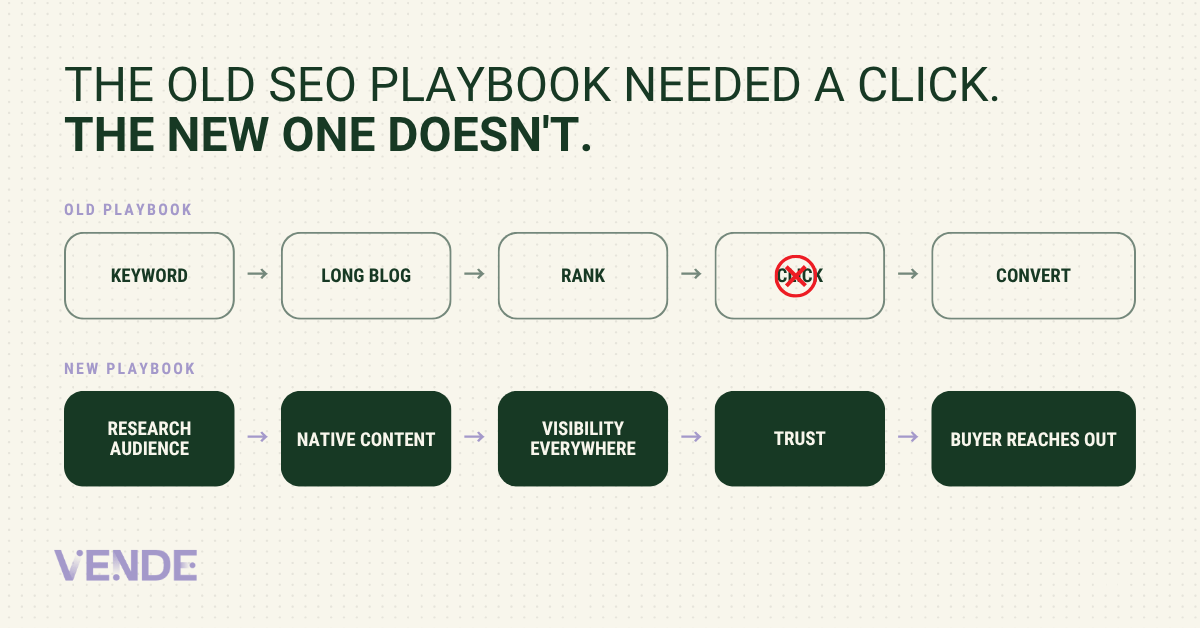
Because Google stopped acting like a gateway and started acting like a destination. For two decades, the formula was simple: research keywords, write the ultimate long-form guide, rank high, earn the click, and convert the visitor. Rand's verdict is that this model isn't dead, but it is dying. Collapsing, even.
The math tells the story. Of the searches that do produce a click, a hefty share goes to Google-owned properties, like YouTube and Maps. Layer AI Overviews on top, summarizing the answer right on the results page, and the slice left for commercial websites gets thin. Remember the old deal where Google crawled your content and paid you back in traffic? Google keeps altering the deal.
The opportunity hasn't disappeared, though. It just moved, and the playbook has to move with it.
If Buyers Aren't Clicking, Where Are They Researching?
Everywhere except your website, at least at first. A buyer can read your LinkedIn post, watch your YouTube video, spot your brand in an AI Overview, and scroll a subreddit where someone recommends you. They walk away more confident in your solution, and Google Analytics never records a thing.
Here's the nuance that matters. Buyers still click. They actually click a lot. They expand comments, hit play, and binge the next video. What they won’t do is click to leave the platform. HubSpot's breakdown of zero-click searches shows how this reshapes every stage of the funnel. Your organic visibility can create real demand. But your reporting simply can't see it.
Can Your Website Still Carry the Whole Buyer Journey?
Not anymore. The old model parked all the middle- and bottom-of-funnel education on your website: what you do, who you serve, the problem you solve, and why buyers should pick you over the competition. Every other channel existed to drag people there.
Now that education has to be displayed where buyers already spend time. Your website still matters, but it's no longer the only homepage of your business.
When someone clicks from your LinkedIn post to your profile, can they grasp your positioning from a few sentences and a banner image? Does your pinned YouTube video explain who you're for (and who you're not for)? If your story needs a 3,000-word page to make sense, buyers with shrinking attention spans won't stick around to hear it.
What Does Zero-Click Content Actually Look Like?
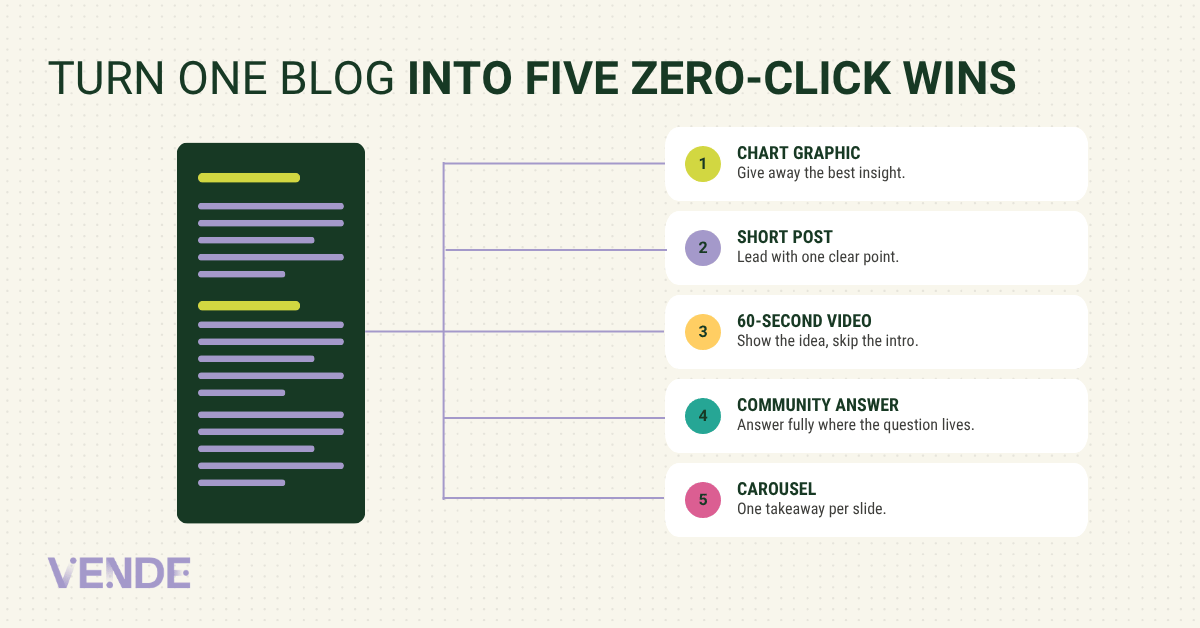
It looks like giving away the good stuff. Instead of dumping your 2,000-word blog onto LinkedIn, build content that fits each channel. Turn research into a standalone chart. Condense an article into a punchy post or swipeable carousel. Pull one big idea into a short video, or answer a real question in a relevant community. Think of it as the click's afterlife: one idea, living on in five places.
The reach difference is hard to ignore. SparkToro sees 9 to 12 times more visibility on LinkedIn posts without an outbound link than on identical posts with one. Social platforms are walled gardens. They reward content that keeps people inside. Need to share the URL? Have a teammate drop it in the comments.
You also don't have to be everywhere. In B2B, your audience may really live in just two or three places, so use audience research to find the specific podcasts, subreddits, and LinkedIn voices they follow. And yes, gated content can still work, as long as it's a fair exchange of value. Share the core insight freely, then let the deeply interested buyer choose to go deeper.
How Does AI Change the Future of B2B SEO?
It’s probably not the way your LinkedIn feed suggests. Plenty of marketers assume ChatGPT and Claude have already replaced Google for B2B discovery. Rand's clickstream data says otherwise. Even among CISOs at companies with $100M+ in revenue, whose AI usage runs about 400% above average, Google still dwarfs standalone AI tools. Referral traffic from AI chats to websites sits well under 1%.
The bigger near-term shift is AI inside search, namely Google's AI Overviews, which are almost certainly influencing your buyers right now. Here's the counterintuitive twist: a Reddit post with two upvotes or a LinkedIn article nobody liked can still shape AI answers within days or weeks. So optimize to be understood, cited, and discussed, not just ranked. Our insights on answer engine optimization dig into exactly how to earn those citations.
How Should You Measure SEO in a Zero-Click World?
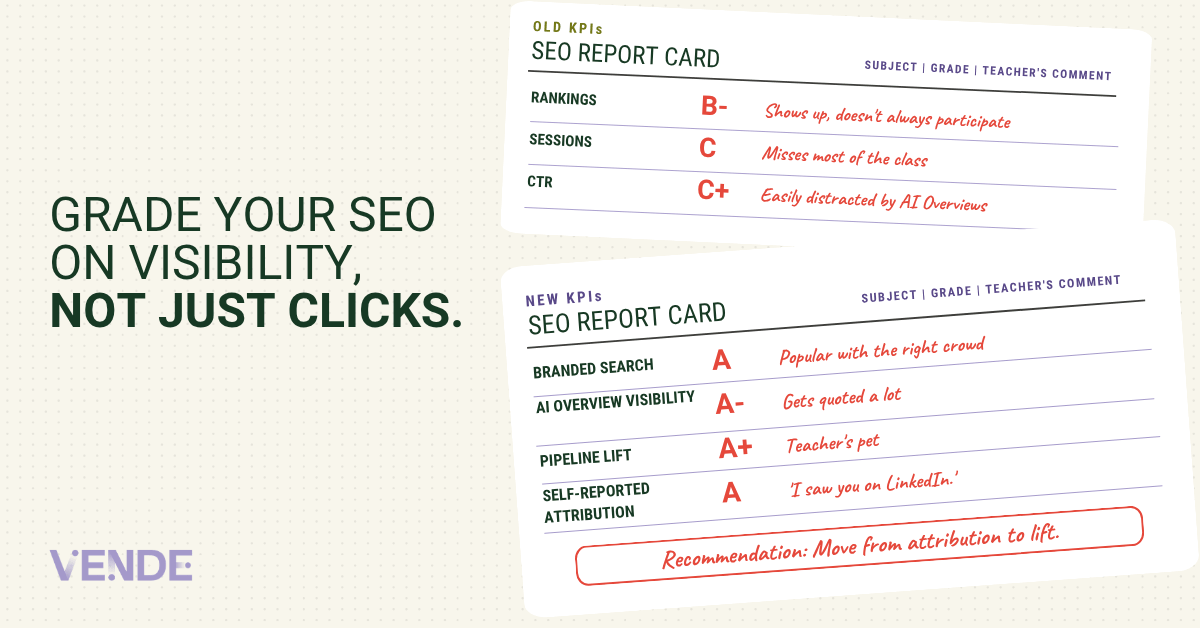
Stop grading SEO on clicks alone. When much of the buyer journey happens in places that never generate a trackable session, last-click reporting will always undercount what's working. Rand's advice for any B2B CMO's first 90 days is to shift from attribution to lift-based measurement: find where your audience pays attention, invest there, and watch whether pipeline and revenue grow.
Rankings and sessions still earn a passing grade. They just can't carry the whole report card anymore, so round them out with:
- Branded search and direct traffic trends
- Mentions and share of voice on your buyers' key platforms
- Visibility in AI Overviews and answer engines (our AI Visibility Cheat Sheet helps here)
- High-intent conversions and self-reported attribution
- Pipeline and revenue lift over time
What Is the New B2B SEO Playbook?
It's a visibility playbook. The click may be gone, but SEO is very much alive. What's disappearing is the assumption that success means dragging every prospect from Google to your website. The new model blends search visibility, native content, audience research, smart distribution, authority, and better measurement.
Brands that adapt will stop asking, "How do we get more organic traffic?" Instead, they'll ask the more useful question: "How do we become visible and valuable everywhere our buyers go to learn?"
Making that shift takes more than a few clever posts. It takes a connected go-to-market engine. At Vende, we help B2B and industrial companies align sales, marketing, and RevOps so buyers find you, trust you, and are ready to talk when they finally do click. As a HubSpot Platinum Partner, we also help teams build AI-ready systems that turn visibility into pipeline. Ready to show up in the answers your buyers trust? Download the B2B Marketer's AEO Field Guide and start building your zero-click strategy today.
Key Takeaways
- SEO isn't dead, but traffic-centric SEO is fading as 68% of U.S. Google searches end without a click.
- B2B buyers are still researching; they're just doing more of it inside LinkedIn, YouTube, Reddit, and Google's AI Overviews.
- Your website can't do all the work, so replicate your positioning and proof on the two or three channels your buyers actually use.
- Platform-native, zero-click content builds reach and trust far better than link-chasing teasers.
- The future of B2B SEO is measured by visibility and business lift, not sessions alone.