For over two decades, B2B marketers have built their visibility strategy on one core principle: rank high on Google, and the leads will follow. And for a long time, that worked.
But AI has changed the rules… literally overnight.
If you're a B2B growth marketer, you've likely sensed the ground shifting beneath your campaigns.
I got into B2B digital marketing back in 2000 because I saw how disruptive the internet would be, and wanted to be part of that wave. Now, AI is set to be even more disruptive. Where there is disruption, we can always find opportunity.
Today, tools like ChatGPT, Perplexity, and Gemini are changing how buyers research. Our prospects are no longer scrolling through blue links; they’re asking AI directly and trusting the answers they get.
- AI usage for research is up 37%
- Traditional search is down for the first time in 2 decades
- Google projects that 95% of B2B buying journeys will begin inside an AI assistant by 2027.
Net/Net: If you're not showing up inside the AI models, you’re not showing up at all.
That’s where Language Model Optimization (LMO) comes in. It’s the next chapter in how B2B brands are discovered, evaluated, and trusted. And in this guide, we’ll show you how to get started.
The Search Landscape Has Shifted—And AI Is Holding the Mic
Remember when ranking #1 on Google felt like winning the lottery?
Today, even the top organic ranking might not get you seen.
That’s because AI Overviews (AIOs), formerly known as Google’s Search Generative Experience (SGE), show up above the results we all used to fight for. Google has reimagined the top half of the search page, and AI now decides what shows up. And it’s not optimized by keywords, it’s curated by AI.
According to SparkToro, the #1 organic listing now only gets 28% of clicks, down from 40% just a few years ago. And 75% of all viewing time happens above the fold, which is now AI-generated real estate.
 Target "Audience"Human users searching via traditional search engines.LLMs/AI systems as primary "interpreters" and human users as ultimate consumers of AI-generated information.Content must appeal to human users while being structured for AI comprehension.Optimization TargetSearch engine algorithms for ranking web pages.Large Language Models for information retrieval, synthesis, and presentation.Understanding algorithmic behavior is key for both, though LLM mechanisms are newer and less transparent.
E-E-A-T Your Way Into LMO
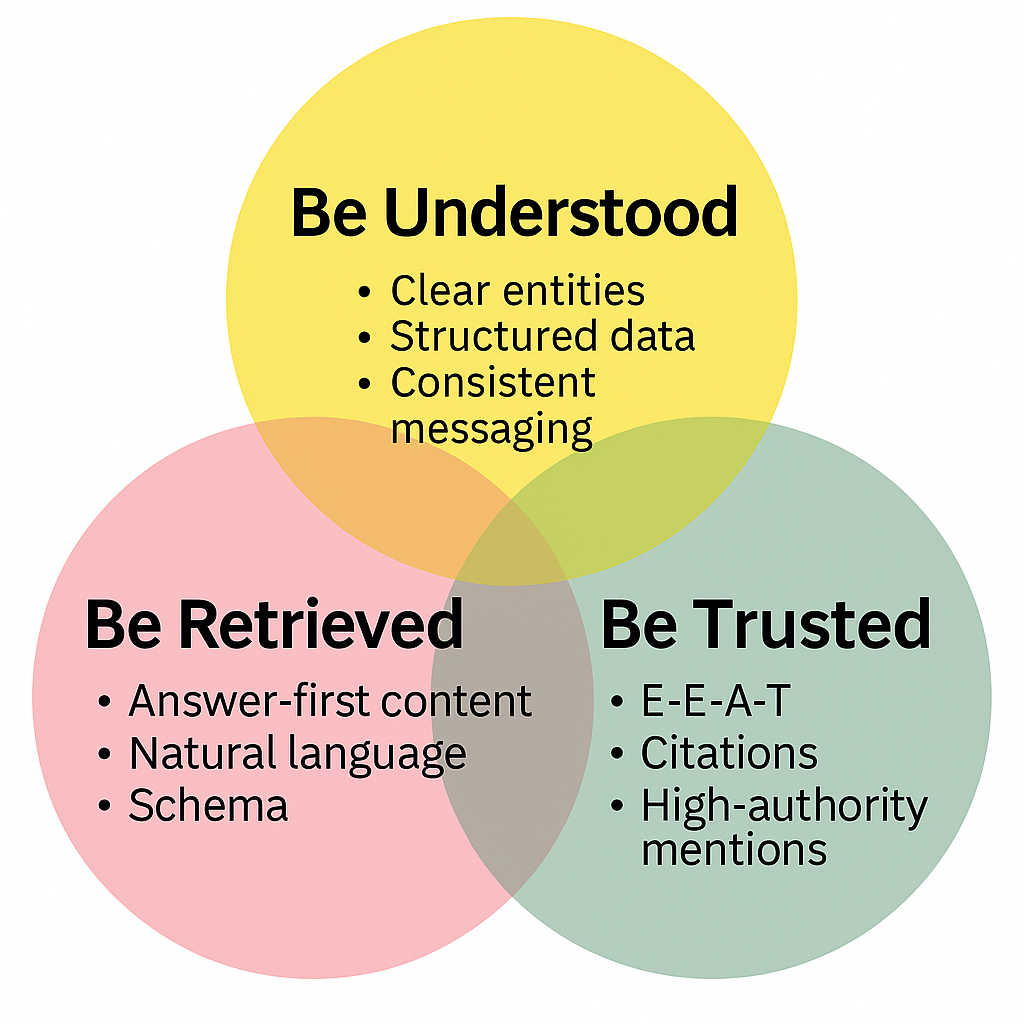
The good news is that the best practices that enable SEO to make your content discoverable and credible are the prerequisites for a good Language Model Optimization strategy. High-quality, user-centric content that demonstrates Experience, Expertise, Authoritativeness, and Trustworthiness (E-E-A-T) is gold for SEO and LMO.
- Experience is how LLMs recognize practical relevance in content (real-world examples, first-hand insights).
- Expertise helps you surface in AI answers when your content aligns with topic depth and subject matter authority.
- Authority is learned by AI from mentions, backlinks, awards, and social proof, just like in classic SEO.
- Trust is earned through citations, structured formats, and signals from third-party platforms (such as G2, Reddit, and review sites).
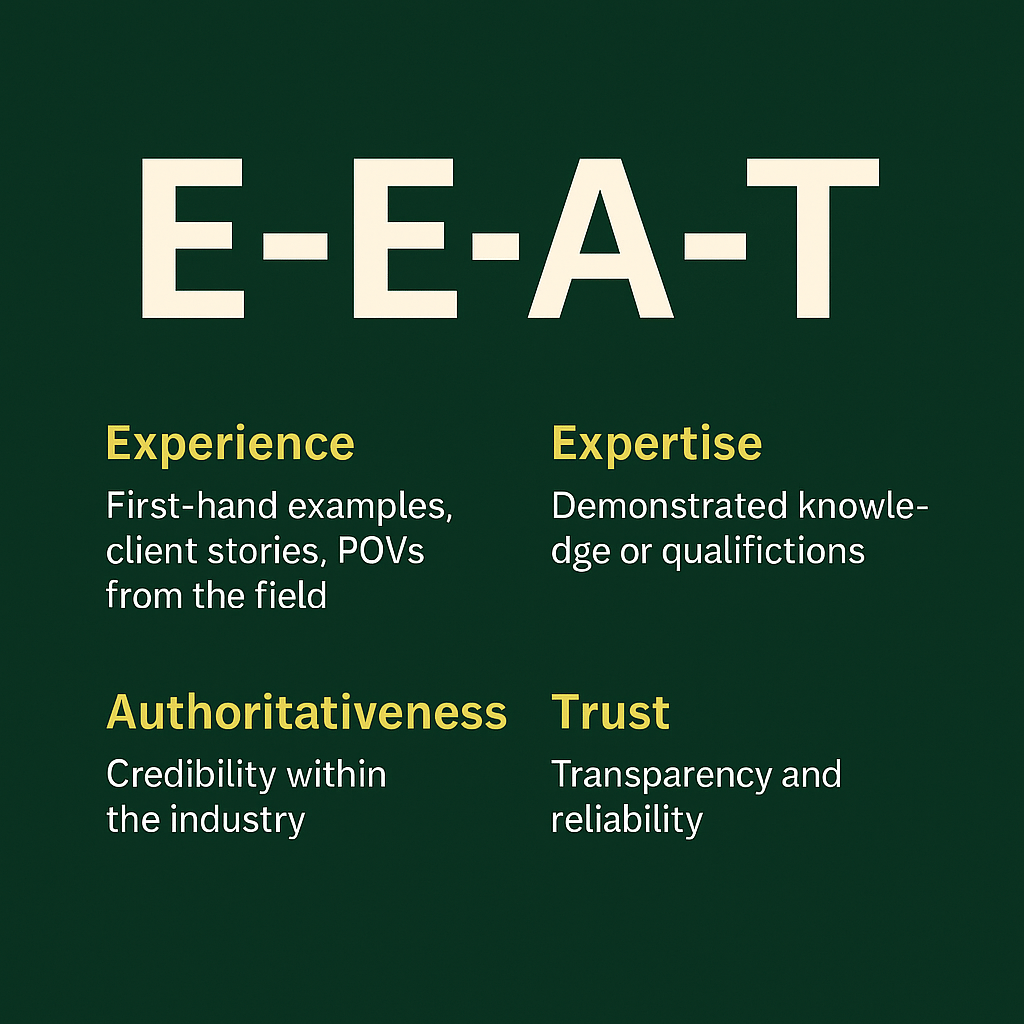
Think of solid SEO practices like E-E-A-T as paying your entry fee to the LMO arena.
How to Get Started with LMO
Transitioning to an LMO-inclusive strategy doesn't require abandoning everything you know. It's about augmenting and refining your approach. Here’s how B2B marketers can start preparing:
1. Champion E-E-A-T - AI models prioritize content from credible, proven sources. That means your Experience, Expertise, Authoritativeness, and Trustworthiness (E-E-A-T) signals must be visible and verifiable. Ways to strengthen E-E-A-T:
- Publish original insights and first-hand experience
- Attribute content to real subject-matter experts
- Earn mentions and backlinks from trusted third parties
- Showcase customer reviews and case studies across platforms
2. Optimize for Entities, Not Just Keywords - AI interprets content through “entities” the people, brands, and concepts it can clearly define and connect. Make sure your digital footprint includes:
- Schema for your company, products, people, and industries
- Consistent descriptions across LinkedIn, Crunchbase, G2, Clutch, Capterra, etc.
- External validation (e.g., mentions on third-party sites)
3. Adopt an Answer-First Content Strategy - Your buyers ask questions directly inside AI tools. If you want to be the answer, your content must be structured to serve it. Here’s how:
- Start pages with a summary that directly answers the core question
- Build complete FAQ sections
- Use plain language and clear headers
- Make sure every key page answers: “What is it?”, “Who is it for?”, “Why does it matter?”
4. Leverage Multimedia and Transcripts - Video and audio are content gold for LLM training and AI search visibility. Here’s how to do it:
- Host serialized events like webinars or training series to generate fresh, recurring content.
- Publish video replays and audio recordings to capture more formats and buyer preferences.
- Add transcripts to every multimedia asset to help LLMs understand your brand’s voice, topics, and unique perspective.
- Repurpose event content into blog posts, social snippets, and resource guides to maximize impact across channels.
5. Level Up Your Technical Foundation - LMO builds on SEO best practices, but adds technical layers designed for AI comprehension. Core technical must-haves:
- Clean, semantic HTML or markdown
- Mobile-friendly, fast-loading pages
- Comprehensive schema markup for key content types
- Add a llms.txt file to control how AI crawlers interact with your site (think robots.txt for LLMs)
6. Monitor How AI Talks About You - You can’t improve what you don’t audit. Start evaluating how AI systems interpret your brand today. Check:
- What shows up when you ask ChatGPT, Gemini, or Perplexity about your company or category?
- Are the answers accurate? Favorable?
- Do your competitors show up when you don’t?
7. Use a Hub and Spoke Content Strategy to Build Topic Clusters - Language models connect the dots across related topics and buyer pain points. To maximize your brand’s presence in these broader conversations, you need a content architecture that mirrors how buyers search and explore. Here’s how to do it:
- Start with 3–5 core content pillars that represent what you want your brand to be known for.
- Create deep dive hub content for each pillar
- Develop supporting spoke posts around each hub (detailed articles, FAQs, or case studies on related topics or sub-issues).
- Interlink everything: link spoke posts back to the hub and to each other, forming a clear content cluster for buyers and LLMs to navigate.
- Audit and refresh: Don’t start from scratch. Update existing content to fit into this structure.
- Execute and iterate: plan your rollout, track creation dates, and repurpose content for social snippets.
8. Add an AI Disclosure Page – An AI Disclosure Page is a central hub of truth about your company. It’s a dedicated page that clearly states who you are, what you do, and key company facts in structured, easy-to-parse formats. This page becomes a trusted source for AI models to verify your brand information and connect the dots across all your digital assets. Core elements to include:
- A clear, authoritative overview of your company
- Details on services, products, and industries you serve
- Team and leadership profiles
- Awards, certifications, and third-party validation
- Structured data markup for better AI comprehension
- Linked from your footer for easy discovery
9. Check out our AI Visibility Cheat Sheet - This free resource provides a practical framework for shaping what AI learns about your brand and tactical checklists to get started.
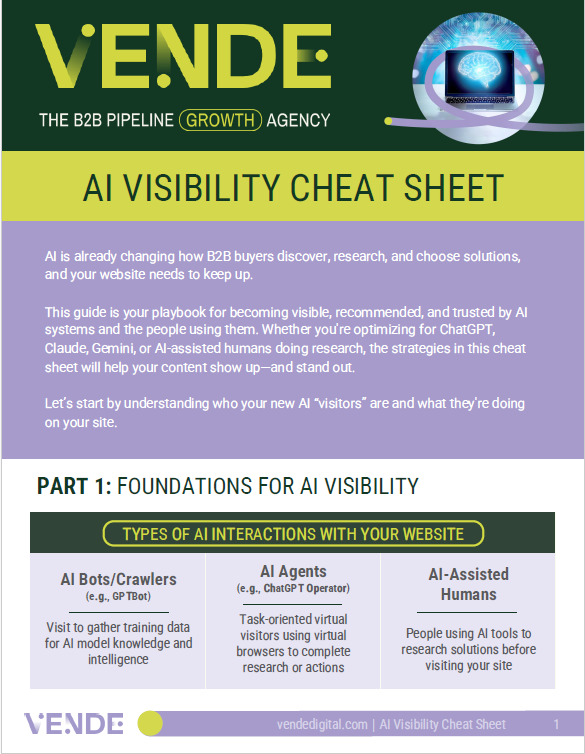
Get your AI Visibility Cheat Sheet Here
Content Flywheels: The Secret to Ongoing Momentum
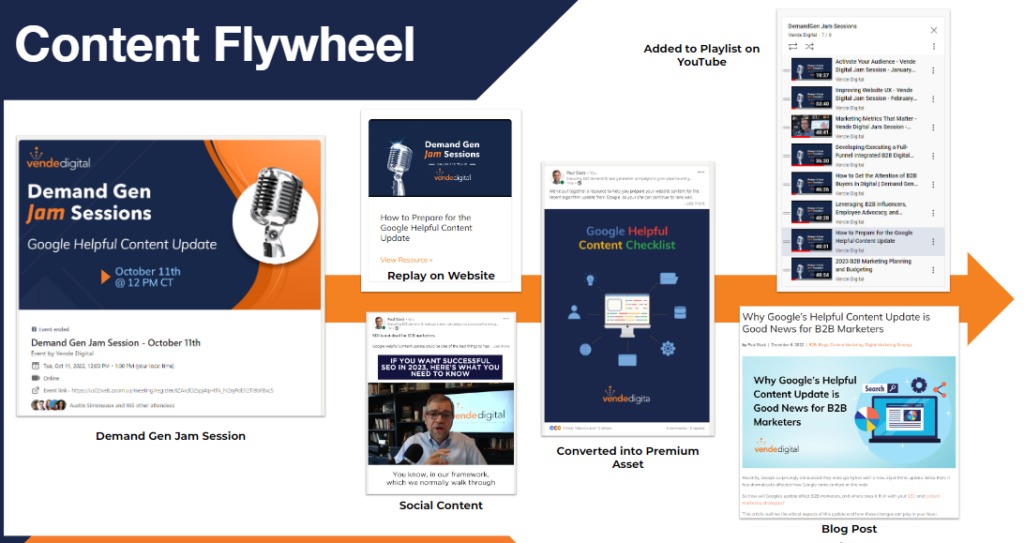
Using a content flywheel is the best way to combine these steps into a manageable, high-impact strategy. Here’s how it works:
- Each asset feeds the next: A webinar becomes a blog post, a blog post becomes a social snippet, and those snippets lead to even deeper resources.
- Content is constantly repurposed and refined: You’re not reinventing the wheel—you’re making it spin faster.
- Visibility compounds: Every turn of the flywheel reinforces your authority in AI models and with buyers, strengthening your brand’s presence in LLM-driven search results.
Think of your content flywheel as a system that amplifies everything you’re already doing without requiring you to start from scratch every time.
How Vende Uses This LMO Playbook to Build AI Visibility
At Vende, we put these exact Language Model Optimization practices to work every month with our B2B Growth Show. This is the primary source of our content flywheel. Our content helps us create persistent signals that LLMs learn to trust (videos, transcripts, blogs, snakable content, etc.) Here’s how it all comes together:
- Our topics come from 3–5 core content pillars; the same pillars that guide our blog and SEO efforts.
- Every event happens at the same time each month, creating a predictable cadence of fresh, authoritative content.
- We publish video replays, transcripts, and supporting blog posts to feed multiple content formats.
- Each asset is interlinked and repurposed as social content and downloadable resources to fuel our content flywheel.
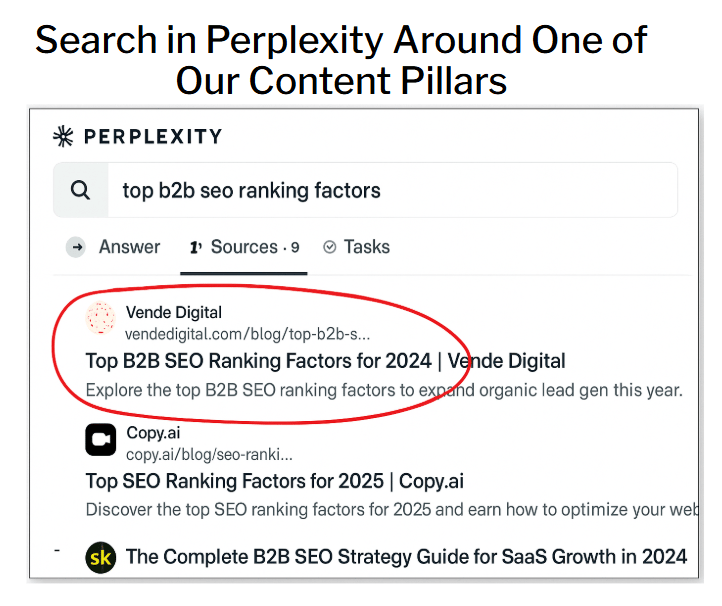
As a result, Vende consistently shows up in LLM results like the one below. We may not earn a click, but we do earn awareness and credibility which is key into day’s clickless, buyer-enabled world.
Key LMO Takeaways
- LMO (Language Model Optimization) is the new frontier for digital visibility. LMO shapes how AI assistants and search overviews include your brand in answers.
- The core of LMO is trust and authority. You accomplish this through E-E-A-T (Experience, Expertise, Authoritativeness, and Trust) signals that drive which companies LLMs will feature as sources.
- Every piece of content counts, from videos, transcripts, blog posts, and event recordings, are signals LLMs notice and remember.
- Content flywheels ensure everything you create works together and nothing is wasted. Every turn of the wheel amplifies your credibility in the eyes of AI and buyers.
- Do a quick test and search your key topics in Perplexity, ChatGPT, or Gemini to see if you show up, how you’re framed, and who else is in the conversation. Here’s a simple prompt to use: “What are the top companies for [your product/service category/content pillar]?”
Vende's Commitment: Guiding Your B2B Through the LMO Transition
We’ve helped B2B companies adapt to every major marketing shift, from the rise of SEO to the dawn of ABM and revenue ops.
LMO is the next shift, and we’re building the playbook with our clients in real time. Our roots in B2B SEO give us a deep understanding of what makes brands discoverable.
Our expertise in B2B strategy ensures we’re focused on what actually drives pipeline, not vanity metrics.
Whether you’re just starting to explore LMO or already seeing shifts in buyer behavior, our role is to help you stay ahead strategically, practically, and with a roadmap built for the complexities of long sales cycles and high-consideration decisions.
Ready to make LMO part of your growth strategy? Let’s talk about what that looks like for your business.

-2.png)
%20VD-4-26-2-Why%20B2B%20Teams%20Need%20to%20Shift%20From%20Lead%20Generation%20to%20Buyer%20Enablement-1.png)